
Why Meal Planning Matters for Runners
Good running starts in the kitchen. You can’t out train a bad diet, and most runners feel that firsthand in the middle of a long run when their energy dries up. Nutrition is fuel real and simple. It’s what keeps your legs moving at mile ten and powers your recovery so you can run again tomorrow. The link between what you eat and how long or fast you can go isn’t theoretical, it’s chemical.
That said, a lot of runners wing it. Skipping breakfast. Grabbing whatever’s handy post run. Trusting too much in gels and bars. These mistakes quietly burn performance. Missing out on carbs or protein throws recovery off course. Going too long without real food leads to energy crashes and creeping fatigue. Underestimating hydration messes with everything.
Meal planning isn’t just some lifestyle hack it’s a competitive edge. Knowing what you’ll eat before and after a session gives you control, not guesswork. Instead of reacting to hunger or fatigue, you’re prepared. And that means more consistent training, better races, and fewer setbacks. Planning ahead isn’t flashy, but it’s how serious runners stay sharp.
What Peak Performance Nutrition Looks Like
Runners don’t need fancy. They need fuel that works. That starts with the three macronutrients: carbs, protein, and fats. Carbs are your go to for energy no surprise there. They power your runs and help restock glycogen stores after. Don’t skimp. On hard training days, carbs may make up more than half your intake.
Protein’s job is recovery. Muscle repair, immune support, day to day function all depend on it. Hit your targets consistently, especially after long runs or tough workouts. Fats often get overlooked, but they’re essential too. They support hormones, keep joints happy, and are a strong fuel source, especially during longer efforts.
Micronutrients aren’t just side players they matter. Iron, calcium, magnesium, B vitamins, and others impact energy, muscle function, and endurance. Sweat out too many electrolytes and skip recovery nutrients, and small problems become bigger ones. Hydration is equally core: water, sodium, potassium, and magnesium all need watching, especially in heat or on high mileage weeks.
Finally, know this what you need during a rest week isn’t what you need during peak volume. As mileage climbs, so should your intake. Add carbs. Adjust hydration. Time meals better. Training cycles shift, and your fuel has to move with them. Plugging into your body’s signals and tracking how you feel isn’t optional. It’s part of the plan.
Building Your Weekly Running Focused Meal Plan
Pre run Meals: What to Eat Before Short, Long, and Speed Sessions
Fueling before a run is straightforward, but timing and type depend on the workout. For short runs (less than 45 minutes), a light snack 30 60 minutes beforehand does the job a banana, a slice of toast with nut butter, or a small energy bar. Enough to get you moving, not enough to weigh you down.
Long runs (60+ minutes) are a different beast. You’ll want carbs, some protein, and time to digest aim to eat a proper meal 2 3 hours before. Think: oatmeal with berries and a spoon of peanut butter, or a bagel with scrambled eggs and fruit.
Speed sessions need fuel that hits fast and doesn’t hang heavy. Go for easily digestible carbs 60 minutes before: a rice cake with honey, a banana with a little yogurt, or a sports drink and a small granola bar. Light, but loaded.
Post run Recovery Meals: Timing, Ratios, and Real Food Examples
You’ve got a 30 60 minute window post run where recovery nutrition matters most. You’re aiming for a 3:1 or 4:1 ratio of carbs to protein. This restocks glycogen and helps rebuild muscle.
Basic post run combos:
Chocolate milk and a banana
Turkey sandwich on whole grain bread
Protein smoothie with fruit and oats
Greek yogurt with granola and berries
Longer or harder the run, the more robust the recovery meal. If you’ve gone over 90 minutes, add a full meal within 1 2 hours grilled chicken bowl, tofu stir fry, or salmon with sweet potato.
Balanced Daily Templates: Structuring Rest vs. Training Days
On training days, space meals and snacks to support energy output and recovery. You’re looking at three meals and two snacks:
Breakfast (carb heavy if you run in the morning)
Mid morning snack (simple carbs + light protein)
Lunch (balance of lean protein, carbs, fat)
Pre run snack (before afternoon sessions)
Dinner (refuel + recovery focus)
On rest days, no need to slash calories unless you’re explicitly cutting weight. Instead, pull back slightly on carbs, bump up veggies, and keep protein steady. Less fuel doesn’t mean less nourishment just smart adjustments based on activity.
For a complete, plug and play schedule, check the full weekly plan here → meal planning guide.
Smart Food Prep Tips for Busy Runners

Meal planning doesn’t have to mean hours in the kitchen. With the right prep strategies, runners can fuel their bodies efficiently even during the busiest training weeks. Below are three key ways to streamline your food prep while still supporting your performance goals.
Batch Cooking for Training Weeks
Batch cooking sets you up for consistent, stress free eating, especially when mileage increases. Cook once, eat multiple times.
Ideas to get started:
Prep protein in bulk (grilled chicken, baked tofu, ground turkey)
Roast a sheet pan of vegetables to mix into meals throughout the week
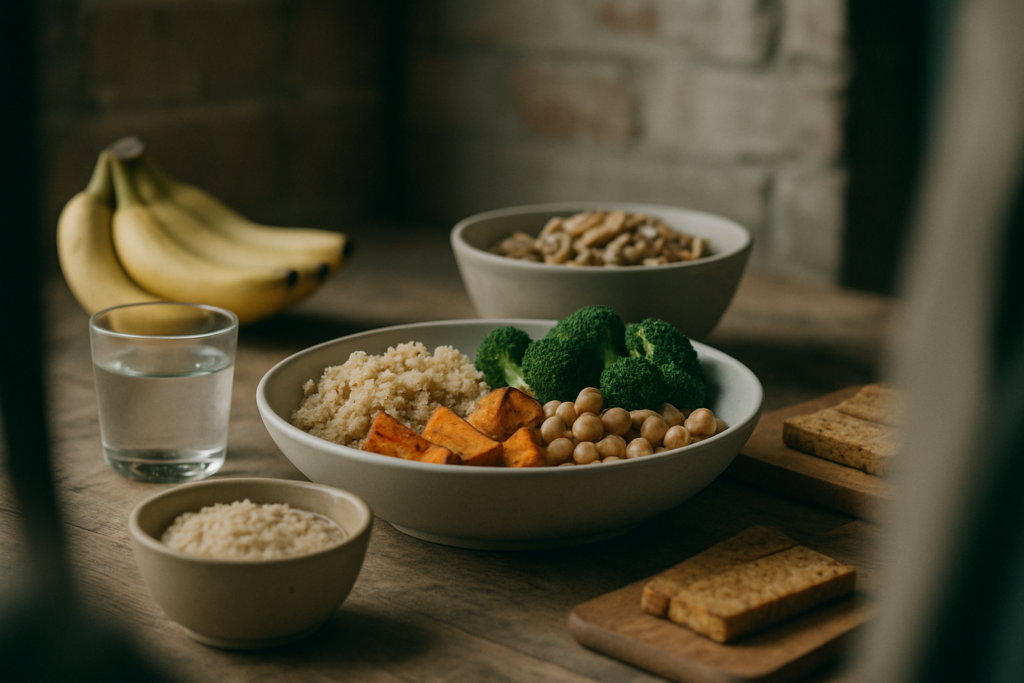
Cook whole grains like quinoa, brown rice, or farro ahead of time
Make freezer friendly power bowls or soups
Portable, High Performance Snacks
Busy runners are always on the move, so it’s essential to have nutrient dense snacks within reach.
Snack staples that travel well:
Nut butter packets and banana
Homemade trail mix (nuts, seeds, dried fruit, dark chocolate)
Energy bites made with oats, nut butter, and chia seeds
Greek yogurt or cottage cheese cups for recovery
Go To Grocery Lists That Save Time and Fuel Performance
Having a set grocery list reduces meal planning fatigue and helps you shop with purpose.
Divide your list into performance focused categories:
Lean proteins: chicken breast, eggs, tempeh, salmon
Complex carbs: oats, sweet potatoes, whole wheat wraps, berries
Healthy fats: olive oil, avocado, nuts, chia seeds
Recovery boosters: leafy greens, beets, turmeric, Greek yogurt
Bonus tip: Keep a running friendly meal prep checklist taped to your fridge or phone notes so you stay consistent week after week.
Mistakes to Dodge
Training hard without eating enough is asking for trouble. Underfueling during peak mileage weeks leads to fatigue, slower recovery, and performance plateaus. It’s not just about logging the miles it’s about giving your body the resources to adapt and get stronger. If your cravings are through the roof or you’re dragging during runs, that’s the red flag.
Then there’s the over reliance on pre packaged “runner” foods. Gels, bars, electrolyte drinks they have their place, especially mid run or immediately post run. But they’re not a substitute for real meals. Too many runners treat them like a main food group and miss out on fiber, micronutrients, and the satisfaction a solid, whole food meal delivers.
Finally, listen to your body. Just because a plan works for someone else doesn’t mean it fits your training, sleep, stress, or digestion. Ignore your body’s feedback too long, and you’re headed toward burnout or injury. Tweak your intake based on how you’re feeling from hunger levels to energy spikes or dips. Nutrition should work with your goals, not fight against them.
Fine Tuning Based on Your Goals
Your meal plan isn’t static it should evolve with your training, your body, and your goals. Whether you’re running to lose weight, hold steady, or crush new performance benchmarks, how you fuel matters.
If weight loss is the goal, trimming back calories can help, but not at the cost of energy. The sweet spot comes from smart portions, dialing down added sugars, and prioritizing nutrient density so you’re not dragging on your long runs. Maintenance means eating enough to support mileage without tipping the scale. For performance? That usually means eating more strategically around your most demanding sessions and recovery windows.
Your race distance matters, too. Fueling for a 5K looks different than prepping for an ultra. Shorter distances mean lighter meals, more focused around speed and recovery. Longer races demand more carbs, more frequent eating, and usually more structure. If your mileage jumps or your workouts intensify, your plate should shift accordingly.
So how do you know when to adjust? Low energy, nagging fatigue, mood swings, or struggling to finish sessions that used to feel manageable these are all red flags. So is hitting a plateau when you’re aiming for change.
Dialing in a meal plan isn’t about one perfect approach it’s about matching nutrition with what your training asks of you right now.
See different levels of plans in our full guide → meal planning guide
The Bottom Line for Runners Serious About Results
Meal planning works if you work it right. Consistency is where the real gains happen. Showing up for your long runs? Great. But showing up at the grocery store, on Sundays with a plan? That’s where training becomes lifestyle. Still, don’t let rigidity trip you up. Life interference is real. Stay flexible enough to swap meals when needed or adjust portion sizes based on how your body’s feeling.
Think of meal planning as part of your training toolkit, not a side chore. Just like tempo runs or recovery days, smart nutrition shapes your performance. Prepare your body with the fuel it actually needs, not whatever grab and go option shows up in the fridge.
Bottom line: eating well isn’t a bonus it’s the base layer of your results. The runners who plan how they eat tend to run longer, recover faster, and perform better. Every mile starts with your plate.